
Visiting Florida: Keys, Everglades, and Wetland Wildlife – March 2026
In March 2026, we made our way to Florida for the first time in nearly a decade. It felt good to be back, especially with the chance to explore new spots. One of the best parts about Florida is how quickly things change from coral reefs to mangroves to freshwater marsh, you’re constantly stepping into a completely different environment.

We started in the Florida Keys and made our way to John Pennekamp Coral Reef State Park. From there, we headed about six miles offshore to snorkel on the reef. Once you get out there, it’s a totally different world - clear water, scattered coral heads, and fish moving at every level. I wasn’t able to bring my camera underwater, but we still saw a ton: barracuda hanging just off the reef, with parrotfish and angelfish moving in and out of the structure.
Back on land, everything shifts again. The Keys are full of mangrove edges. It's tight, tangled habitat right along the water that holds a ton of life, especially toward sunset. We spent some time walking through a mix of shoreline and thicker mangroves and picked up Osprey, ibis, warblers, a mangrove cuckoo, and several species of lizards. It’s one of those places where you just keep scanning because something is always moving.
The next day, we headed into Everglades National Park. Right away, it feels different. Everything opens up into these huge, flat expanses of sawgrass with slow-moving water and scattered tree islands. We drove all the way down to Flamingo, stopping anywhere that looked promising.
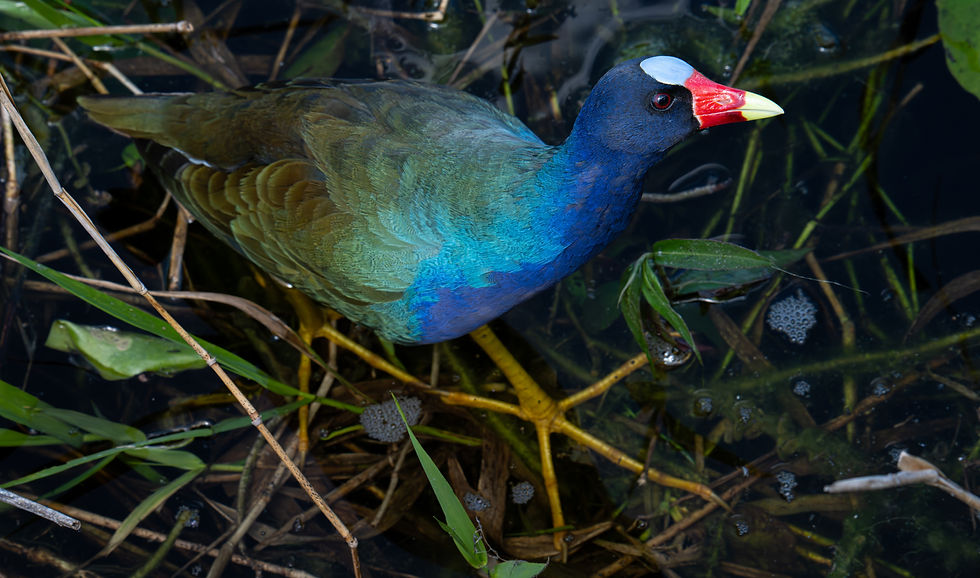
One of the best stops was the Anhinga Trail. This spot is just loaded with wildlife. The boardwalk takes you right through shallow water and thick vegetation, so you’re basically in the middle of everything. We saw Purple Gallinule, White Ibis, cormorants, woodpeckers, catbirds, warblers, herons, Swallow-tailed Kites, and plenty of Anhingas, and some gators. There’s constant movement.

We also spent time at Mahogany Hammock, which is a completely different feel. It’s shaded, dense, and a lot more enclosed than the open marsh. You don’t see as far, but there’s a lot happening if you slow down - mostly warblers and catbirds moving through the understory.

We made it down to Flamingo right at sunset, which was perfect timing. This area is more coastal and open. It’s a pretty dramatic shift from the inland marsh. Not long after we got there, we found an Osprey perched in the last light. While I was photographing it, Emma spotted a nest in the tree I was basically under. The nest was surprisingly low, with two young birds in it. That was a cool moment. You don’t usually get that kind of eye-level view into a nest like that. We also saw Spotted Sandpiper, Snowy Egret, Shiny Cowbird, and Black Vulture around the area.
Our last stop was Wakodahatchee Wetlands, and honestly, this place was wild. It’s a constructed wetland, but it’s absolutely packed with birds. There are nesting colonies everywhere, and the boardwalk runs right through the middle of it all.
The biggest difference here is how tolerant the birds are. They’re completely used to people, so you can watch and photograph them from just a few feet away. We saw Wood Storks, White and Glossy Ibis, Tricolored Herons, Cattle Egrets, Great Egrets, Anhingas, and gallinules - all actively feeding, nesting, or moving around the wetlands.
Overall, this trip really showed how much variety Florida has to offer. Every stop felt different, both in terms of habitat and the way wildlife behaved. It’s the kind of place you can keep coming back to and still find something new each time.
Interested in joining a guided wildlife or loon photography paddle?
I offer private and small-group trips focused on photographing wildlife in their natural habitat, with tips and techniques for capturing the perfect shot from the water. Email me at andrewhudnut247@gmail.com for upcoming dates and details, or visit my Workshops page to see what we have planned next!


Comments