
A Summer on Adirondack Lakes: Wildlife Photography Highlights of 2026

There’s something special about an Adirondack lake in the summer. The mist rising off the water at sunrise, the call of a loon echoing across the lake, and the quiet anticipation of what might be waiting around the next bend are what keep me coming back, paddle after paddle. No two mornings are ever the same, and that unpredictability is one of my favorite parts of photographing wildlife from a kayak.
This summer has been no exception. From territorial loon disputes and growing chicks to hunting eagles, busy wetlands, and an unforgettable encounter with one of the Adirondacks’ most secretive birds, the lakes have provided no shortage of memorable moments. While every species has its place in the story, one bird continues to define my summers more than any other - the Common Loon
Common Loons: The Heart of an Adirondack Summer
If you've spent any amount of time on the water with me, you already know that loons are my favorite bird to photograph. They're incredibly photogenic, but what really draws me in is their behavior. Every paddle offers something different, and spending enough time with them allows you to witness moments that many people never realize happen.

This summer has been filled with successful nesting pairs, growing chicks, and plenty of territorial drama. One of the first highlights of the summer was getting to watch loon swap places on their nest. This is a behavior I have been hoping to witness for years now, and the Loons finally felt comfortable enough to let me in on this pert of their life.
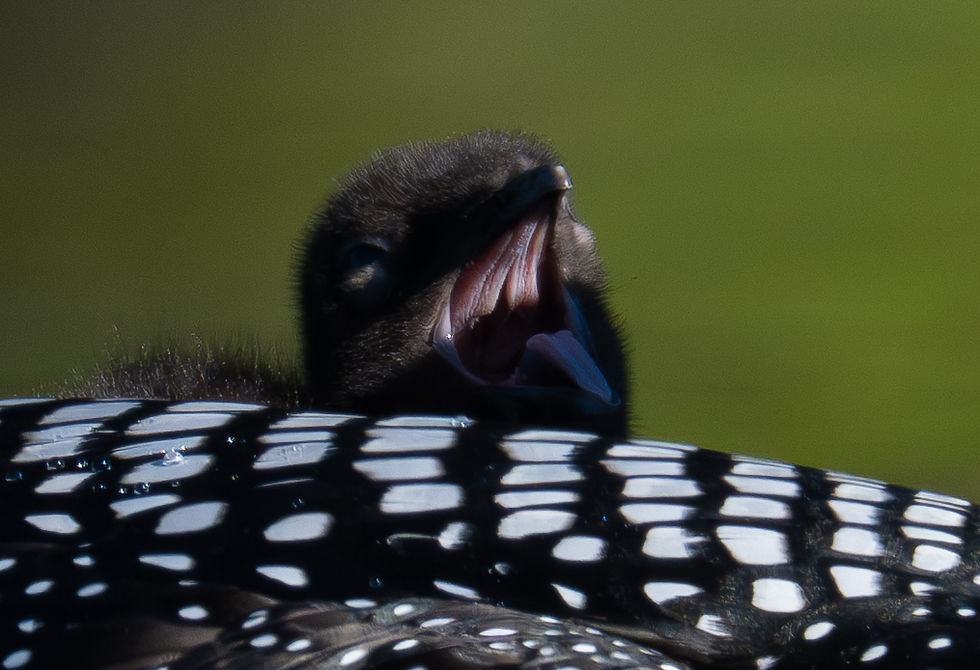
Not two weeks later, I witnessed another incredible moment - a freshly hatched loon chick! While observing mom on the nest, she lifted her wing just enough to show a less than 6 hour old loon chick! Just a day later, this chick was already on the water with dad while mom incubated the other egg. Watching a newly hatched chick ride on its parent's back is one of the most rewarding sights on an Adirondack lake, especially after watching the parents nesting. In those first few weeks, chicks rely heavily on their parents, not only for food, but also for warmth and protection from predators.

As the chicks grow, the interactions become even more entertaining. I've watched parents deliver fish after fish, chicks stretching their tiny wings for the first time, families preening together, and young birds learning how to forage on their own. Even simple behaviors, like a parent foot-waggling after a dive or stretching its wings in the early morning light, make for incredible photographic opportunities.
Of course, summer also brings territorial disputes.
As juvenile and non-breeding loons begin moving around the lakes, established breeding pairs work tirelessly to defend their nesting territories. We've watched males yodel across the water, pairs exchange tremolo calls, birds perform the famous penguin dance and vulture pose, and groups of loons engage in dramatic underwater chases. Several times this summer I've watched loon gatherings form in the middle of a lake, with birds diving, calling, and eventually taking flight
one after another.

Some of my favorite photographs from this season never happened because I chose to put the camera down.
Watching two adults leave their chick hidden safely in the wetland while they defended their territory, or witnessing multiple loons launching into flight are experiences that are impossible to appreciate fully through a viewfinder. Sometimes the best wildlife photography lesson is remembering to simply watch.
Perhaps the biggest lesson with loons is that patience always wins. Giving birds plenty of space and allowing them to become comfortable often results in closer, more natural encounters than paddling after them. Respecting wildlife not only leads to better photographs - it creates better experiences for everyone on the water.

Wetlands: More Than Just Loons
One of my favorite places to visit is little island. Each year, it hosts a Loon nest and Great Blue Heron rookery. This year, the rookery was home to three active nests, each producing an impressive three to four chicks. It's amazing to watch these nests progress throughout the summer. Early in the season, the chicks are little more than fuzzy gray heads peeking over the edge of the nest. As they grow, they're constantly standing, stretching, flapping their wings, and competing with one another for every meal.

One of the coolest experiences isn't something you see, it's something you hear. Long before you reach the island, you'll the unmistakable cackling calls of hungry young herons. As the adults return with food, the entire rookery erupts in noise. Hearing those calls echo across the lake is one of my favorite sounds of an Adirondack summer and always lets me know the colony is thriving.
Watching the adults arrive is just as fascinating. Great Blue Herons return from feeding areas with fish, amphibians, and other prey tucked into their throats, carefully delivering meals to chicks that seem endlessly hungry. It never gets old watching these interactions unfold, especially as the young birds grow from awkward nestlings into nearly full-sized herons preparing for their first flights.


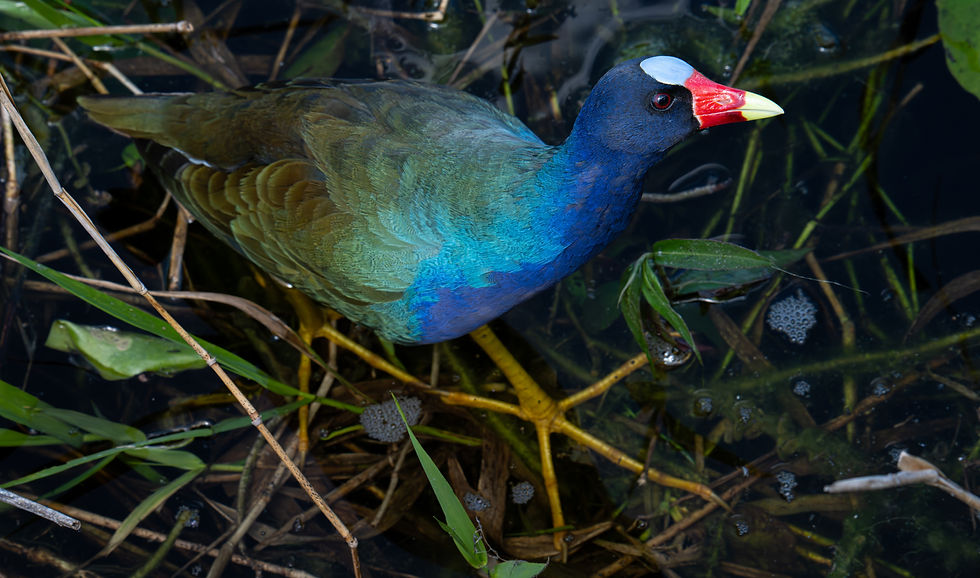
Beyond the rookery, the surrounding marshes have been alive with activity. Red-winged Blackbirds cling to cattails while Common Grackles patrol the shoreline in search of insects and aquatic prey. Along shorelines and floating peat in thew wetland, a variety of shorebirds stop to feed, munching on insects and other invertebrates. Although they're often overlooked in favor of larger, more charismatic species, these smaller birds add life and diversity to every paddle and can make excellent photography subjects with a little patience.

It's easy to paddle past these wetlands on the way to search for loons, but slowing down often reveals an entirely different side of the Adirondacks. Between the bustling heron colony, the chorus of marsh birds, and the ever-changing mix of shorebirds, these quiet corners of the lake have become some of my favorite places to spend time each summer.
Raptors Above the Water
Few things interrupt a peaceful paddle quite like the shadow of a Bald Eagle passing overhead. This summer we've enjoyed several eagle encounters of watching birds soar over the lakes in search of fish. Osprey have been equally impressive, hovering over open water before plunging feet-first into the lake in pursuit of their next meal.

An Unexpected Visitor
One of the highlights of the summer came from a bird that most people never see. While quietly paddling through the Wetland, I noticed an unusually light and tall stick I haven't seen before, assuming the beavers perhaps dragged it. I though to myself "wouldn't it be cool if that stick was a bittern". As I paddled deeper, the stick flew away...

True to its reputation, the American Bittern relied on its incredible camouflage, freezing motionless among the lilies with its bill pointed skyward. It's easy to paddle right past one without ever realizing it's there, which I did three times that morning, as I stumbled upon two additional Bitterns, giving a total of three for the day. Moments like this are a reminder that wildlife photography isn't always about chasing action. Sometimes it's about slowing down enough to notice what has been hiding in plain sight all along.
More Than Birds
Although birds are usually my primary focus on the water, this summer offered a few memorable mammal encounters as well. On one paddle, we caught a brief glimpse of a river otter as it surfaced only for a moment before disappearing beneath the water just as quickly as it had appeared. Otters never seem to stay in one place for long, making every sighting feel like a special treat.
White-tailed deer were much more cooperative. Throughout the summer, we've encountered deer browsing quietly along shorelines, stepping into the shallows to feed on aquatic vegetation, or simply standing motionless in the morning mist. It's always a pleasant surprise to round a bend in the lake and find a deer calmly watching us paddle past.
Every Paddle Tells a Different Story
If this summer has reinforced one thing, it's that wildlife photography is wonderfully unpredictable. Some mornings are filled with dramatic loon encounters. Others are quieter, rewarding patience with songbirds, herons, or a surprise bird hidden deep within the marsh. There are days when the photographs are incredible, and others when the experience itself becomes the lasting memory.

That's one of the reasons I love guiding photography paddles on Adirondack lakes. Every trip offers a new story, and every person experiences the lake a little differently. Whether you're hoping to photograph your first loon, improve your wildlife photography skills, or simply spend a morning immersed in nature, there's always something waiting just around the next bend.
Interested in joining a guided wildlife photography paddle?
If you'd like to experience the Adirondacks from the water while learning wildlife photography techniques, ethical field practices, and the natural history of the species we encounter, I'd love to have you join me on a future paddle.
Whether you're an experienced photographer or picking up a camera for the first time, these trips are designed to help you create meaningful images while appreciating the incredible wildlife that calls the Adirondacks home.


Comments